

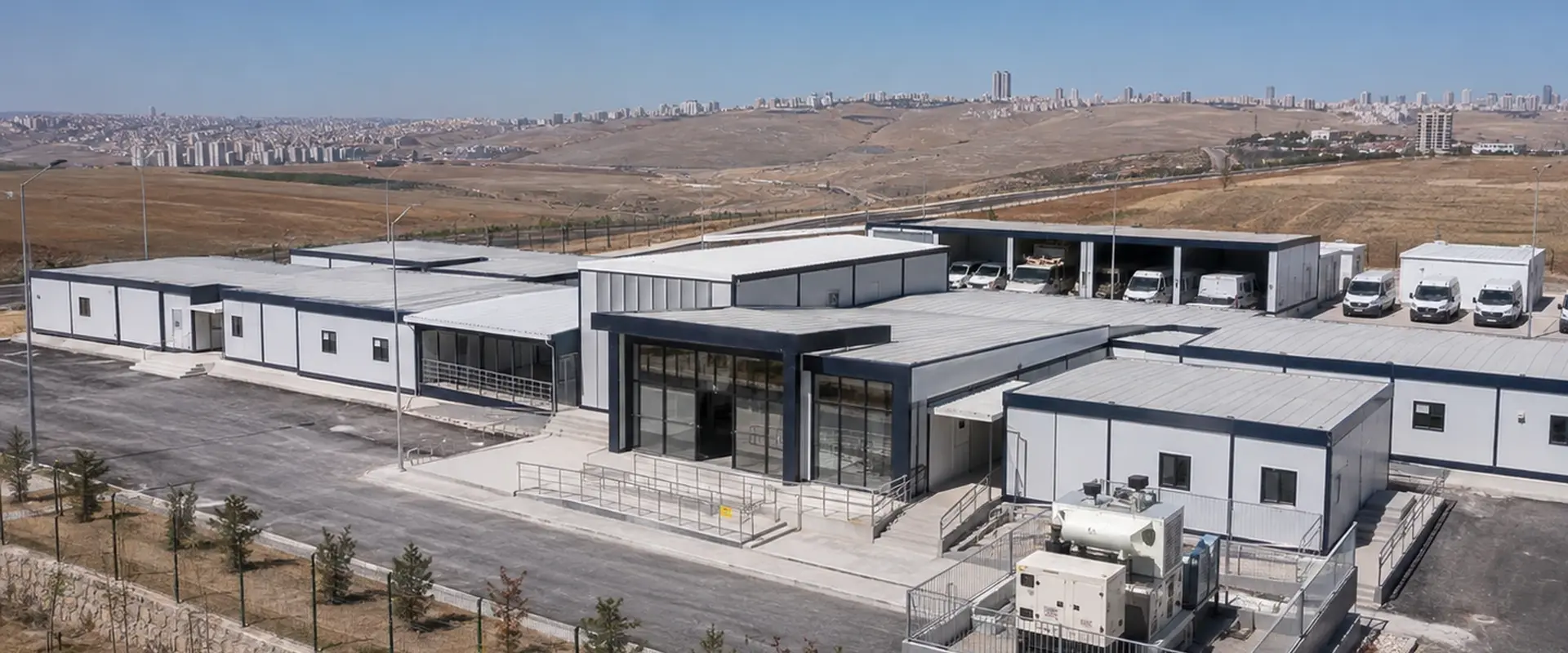
Critical camp decisions, from population and layout to fire safety and dining workflows. This guide connects decisions from the early idea through technical approval and operation.
Camp population
Count shifts, visitors, subcontractors and growth separately. Within how to plan a construction camp: offices, dormitories and social areas, this is not an isolated drawing decision: it affects user experience, technical performance, investment cost and the delivery programme at the same time. A strong team separates known information, uncertainty and acceptance criteria before selecting products. It then defines measurable targets and creates one decision language for the manufacturer, designer, site team and operator. The reasons behind each choice remain traceable, so the same issue is not reopened by different people later. That discipline improves decision speed and the quality of the completed building.
Size beds, dining seats, WCs and showers around the peak. The evaluation should consider more than initial price. Delivery time, maintenance access, energy demand, user capacity, potential expansion and reuse value all belong in the same matrix. When plans, sections, samples, performance criteria and responsibility limits are reviewed together before manufacture, factory speed becomes a genuine advantage. Modular work packages progress in parallel, so a late decision that appears small can influence several completed assemblies. The approval schedule therefore deserves the same care as the technical programme, with a named owner and deadline for each decision.
Average population figures create queues and service failure. The most effective risk control is to expose assumptions and avoid leaving inspection to the final day. At stage 1, a concise checklist should name the expected result, responsible party, evidence and closure date. Photographic records, sample approvals and functional tests do more than verify quality; they improve communication between every party. The goal is not to create the largest set of documents, but to make the right decision at the right time and describe it clearly enough for site execution. That discipline creates measurable value from the building's first appearance through many years of operation.
Functional zones
Separate management, accommodation, dining, hygiene and technical zones. Within how to plan a construction camp: offices, dormitories and social areas, this is not an isolated drawing decision: it affects user experience, technical performance, investment cost and the delivery programme at the same time. A strong team separates known information, uncertainty and acceptance criteria before selecting products. It then defines measurable targets and creates one decision language for the manufacturer, designer, site team and operator. The reasons behind each choice remain traceable, so the same issue is not reopened by different people later. That discipline improves decision speed and the quality of the completed building.
Resolve pedestrian and vehicle movement as separate layers. The evaluation should consider more than initial price. Delivery time, maintenance access, energy demand, user capacity, potential expansion and reuse value all belong in the same matrix. When plans, sections, samples, performance criteria and responsibility limits are reviewed together before manufacture, factory speed becomes a genuine advantage. Modular work packages progress in parallel, so a late decision that appears small can influence several completed assemblies. The approval schedule therefore deserves the same care as the technical programme, with a named owner and deadline for each decision.
Mixed flows weaken safety and efficiency. The most effective risk control is to expose assumptions and avoid leaving inspection to the final day. At stage 2, a concise checklist should name the expected result, responsible party, evidence and closure date. Photographic records, sample approvals and functional tests do more than verify quality; they improve communication between every party. The goal is not to create the largest set of documents, but to make the right decision at the right time and describe it clearly enough for site execution. That discipline creates measurable value from the building's first appearance through many years of operation.
Module grid
Combine standard modules, corridors, stairs and shared rooms on a rational grid. Within how to plan a construction camp: offices, dormitories and social areas, this is not an isolated drawing decision: it affects user experience, technical performance, investment cost and the delivery programme at the same time. A strong team separates known information, uncertainty and acceptance criteria before selecting products. It then defines measurable targets and creates one decision language for the manufacturer, designer, site team and operator. The reasons behind each choice remain traceable, so the same issue is not reopened by different people later. That discipline improves decision speed and the quality of the completed building.
Reserve foundations and services for later phases from day one. The evaluation should consider more than initial price. Delivery time, maintenance access, energy demand, user capacity, potential expansion and reuse value all belong in the same matrix. When plans, sections, samples, performance criteria and responsibility limits are reviewed together before manufacture, factory speed becomes a genuine advantage. Modular work packages progress in parallel, so a late decision that appears small can influence several completed assemblies. The approval schedule therefore deserves the same care as the technical programme, with a named owner and deadline for each decision.
Unplanned additions compromise escape and courtyards. The most effective risk control is to expose assumptions and avoid leaving inspection to the final day. At stage 3, a concise checklist should name the expected result, responsible party, evidence and closure date. Photographic records, sample approvals and functional tests do more than verify quality; they improve communication between every party. The goal is not to create the largest set of documents, but to make the right decision at the right time and describe it clearly enough for site execution. That discipline creates measurable value from the building's first appearance through many years of operation.
Site offices
Arrange meetings, project control, archive, management and open office around workflow. Within how to plan a construction camp: offices, dormitories and social areas, this is not an isolated drawing decision: it affects user experience, technical performance, investment cost and the delivery programme at the same time. A strong team separates known information, uncertainty and acceptance criteria before selecting products. It then defines measurable targets and creates one decision language for the manufacturer, designer, site team and operator. The reasons behind each choice remain traceable, so the same issue is not reopened by different people later. That discipline improves decision speed and the quality of the completed building.
Plan data and storage with furniture. The evaluation should consider more than initial price. Delivery time, maintenance access, energy demand, user capacity, potential expansion and reuse value all belong in the same matrix. When plans, sections, samples, performance criteria and responsibility limits are reviewed together before manufacture, factory speed becomes a genuine advantage. Modular work packages progress in parallel, so a late decision that appears small can influence several completed assemblies. The approval schedule therefore deserves the same care as the technical programme, with a named owner and deadline for each decision.
Poor acoustics damage meetings and focused work. The most effective risk control is to expose assumptions and avoid leaving inspection to the final day. At stage 4, a concise checklist should name the expected result, responsible party, evidence and closure date. Photographic records, sample approvals and functional tests do more than verify quality; they improve communication between every party. The goal is not to create the largest set of documents, but to make the right decision at the right time and describe it clearly enough for site execution. That discipline creates measurable value from the building's first appearance through many years of operation.
Dormitory planning
Set standards for beds, lockers, ventilation and privacy. Within how to plan a construction camp: offices, dormitories and social areas, this is not an isolated drawing decision: it affects user experience, technical performance, investment cost and the delivery programme at the same time. A strong team separates known information, uncertainty and acceptance criteria before selecting products. It then defines measurable targets and creates one decision language for the manufacturer, designer, site team and operator. The reasons behind each choice remain traceable, so the same issue is not reopened by different people later. That discipline improves decision speed and the quality of the completed building.
Provide light- and noise-controlled rooms for night shifts. The evaluation should consider more than initial price. Delivery time, maintenance access, energy demand, user capacity, potential expansion and reuse value all belong in the same matrix. When plans, sections, samples, performance criteria and responsibility limits are reviewed together before manufacture, factory speed becomes a genuine advantage. Modular work packages progress in parallel, so a late decision that appears small can influence several completed assemblies. The approval schedule therefore deserves the same care as the technical programme, with a named owner and deadline for each decision.
Overcrowding harms rest, hygiene and retention. The most effective risk control is to expose assumptions and avoid leaving inspection to the final day. At stage 5, a concise checklist should name the expected result, responsible party, evidence and closure date. Photographic records, sample approvals and functional tests do more than verify quality; they improve communication between every party. The goal is not to create the largest set of documents, but to make the right decision at the right time and describe it clearly enough for site execution. That discipline creates measurable value from the building's first appearance through many years of operation.
Dining workflow
Create a one-way flow from receiving through service to dirty return. Within how to plan a construction camp: offices, dormitories and social areas, this is not an isolated drawing decision: it affects user experience, technical performance, investment cost and the delivery programme at the same time. A strong team separates known information, uncertainty and acceptance criteria before selecting products. It then defines measurable targets and creates one decision language for the manufacturer, designer, site team and operator. The reasons behind each choice remain traceable, so the same issue is not reopened by different people later. That discipline improves decision speed and the quality of the completed building.
Calculate seating and serving capacity against shift windows. The evaluation should consider more than initial price. Delivery time, maintenance access, energy demand, user capacity, potential expansion and reuse value all belong in the same matrix. When plans, sections, samples, performance criteria and responsibility limits are reviewed together before manufacture, factory speed becomes a genuine advantage. Modular work packages progress in parallel, so a late decision that appears small can influence several completed assemblies. The approval schedule therefore deserves the same care as the technical programme, with a named owner and deadline for each decision.
Crossing clean and dirty flows creates hygiene risk. The most effective risk control is to expose assumptions and avoid leaving inspection to the final day. At stage 6, a concise checklist should name the expected result, responsible party, evidence and closure date. Photographic records, sample approvals and functional tests do more than verify quality; they improve communication between every party. The goal is not to create the largest set of documents, but to make the right decision at the right time and describe it clearly enough for site execution. That discipline creates measurable value from the building's first appearance through many years of operation.
WC and shower capacity
Consider post-shift peaks and accessibility. Within how to plan a construction camp: offices, dormitories and social areas, this is not an isolated drawing decision: it affects user experience, technical performance, investment cost and the delivery programme at the same time. A strong team separates known information, uncertainty and acceptance criteria before selecting products. It then defines measurable targets and creates one decision language for the manufacturer, designer, site team and operator. The reasons behind each choice remain traceable, so the same issue is not reopened by different people later. That discipline improves decision speed and the quality of the completed building.
Coordinate hot water, drainage, slip resistance and cleaning. The evaluation should consider more than initial price. Delivery time, maintenance access, energy demand, user capacity, potential expansion and reuse value all belong in the same matrix. When plans, sections, samples, performance criteria and responsibility limits are reviewed together before manufacture, factory speed becomes a genuine advantage. Modular work packages progress in parallel, so a late decision that appears small can influence several completed assemblies. The approval schedule therefore deserves the same care as the technical programme, with a named owner and deadline for each decision.
Poor hot water and ventilation cause dissatisfaction and mould. The most effective risk control is to expose assumptions and avoid leaving inspection to the final day. At stage 7, a concise checklist should name the expected result, responsible party, evidence and closure date. Photographic records, sample approvals and functional tests do more than verify quality; they improve communication between every party. The goal is not to create the largest set of documents, but to make the right decision at the right time and describe it clearly enough for site execution. That discipline creates measurable value from the building's first appearance through many years of operation.
Fire and evacuation
Design escape, door swing, detection, emergency lighting and assembly areas. Within how to plan a construction camp: offices, dormitories and social areas, this is not an isolated drawing decision: it affects user experience, technical performance, investment cost and the delivery programme at the same time. A strong team separates known information, uncertainty and acceptance criteria before selecting products. It then defines measurable targets and creates one decision language for the manufacturer, designer, site team and operator. The reasons behind each choice remain traceable, so the same issue is not reopened by different people later. That discipline improves decision speed and the quality of the completed building.
Provide independent safe stairs in multi-storey blocks. The evaluation should consider more than initial price. Delivery time, maintenance access, energy demand, user capacity, potential expansion and reuse value all belong in the same matrix. When plans, sections, samples, performance criteria and responsibility limits are reviewed together before manufacture, factory speed becomes a genuine advantage. Modular work packages progress in parallel, so a late decision that appears small can influence several completed assemblies. The approval schedule therefore deserves the same care as the technical programme, with a named owner and deadline for each decision.
Later enclosure can destroy the evacuation strategy. The most effective risk control is to expose assumptions and avoid leaving inspection to the final day. At stage 8, a concise checklist should name the expected result, responsible party, evidence and closure date. Photographic records, sample approvals and functional tests do more than verify quality; they improve communication between every party. The goal is not to create the largest set of documents, but to make the right decision at the right time and describe it clearly enough for site execution. That discipline creates measurable value from the building's first appearance through many years of operation.
Infrastructure spine
Gather power, water, drainage, data and fire services in an accessible spine. Within how to plan a construction camp: offices, dormitories and social areas, this is not an isolated drawing decision: it affects user experience, technical performance, investment cost and the delivery programme at the same time. A strong team separates known information, uncertainty and acceptance criteria before selecting products. It then defines measurable targets and creates one decision language for the manufacturer, designer, site team and operator. The reasons behind each choice remain traceable, so the same issue is not reopened by different people later. That discipline improves decision speed and the quality of the completed building.
Check capacity against the final camp size. The evaluation should consider more than initial price. Delivery time, maintenance access, energy demand, user capacity, potential expansion and reuse value all belong in the same matrix. When plans, sections, samples, performance criteria and responsibility limits are reviewed together before manufacture, factory speed becomes a genuine advantage. Modular work packages progress in parallel, so a late decision that appears small can influence several completed assemblies. The approval schedule therefore deserves the same care as the technical programme, with a named owner and deadline for each decision.
Undersized mains require expensive replacement. The most effective risk control is to expose assumptions and avoid leaving inspection to the final day. At stage 9, a concise checklist should name the expected result, responsible party, evidence and closure date. Photographic records, sample approvals and functional tests do more than verify quality; they improve communication between every party. The goal is not to create the largest set of documents, but to make the right decision at the right time and describe it clearly enough for site execution. That discipline creates measurable value from the building's first appearance through many years of operation.
Climate and external space
Design shade, wind protection, drainage and paths around climate data. Within how to plan a construction camp: offices, dormitories and social areas, this is not an isolated drawing decision: it affects user experience, technical performance, investment cost and the delivery programme at the same time. A strong team separates known information, uncertainty and acceptance criteria before selecting products. It then defines measurable targets and creates one decision language for the manufacturer, designer, site team and operator. The reasons behind each choice remain traceable, so the same issue is not reopened by different people later. That discipline improves decision speed and the quality of the completed building.
Use courtyards for social comfort and controlled movement. The evaluation should consider more than initial price. Delivery time, maintenance access, energy demand, user capacity, potential expansion and reuse value all belong in the same matrix. When plans, sections, samples, performance criteria and responsibility limits are reviewed together before manufacture, factory speed becomes a genuine advantage. Modular work packages progress in parallel, so a late decision that appears small can influence several completed assemblies. The approval schedule therefore deserves the same care as the technical programme, with a named owner and deadline for each decision.
Mud, dust and sun quickly degrade indoor quality. The most effective risk control is to expose assumptions and avoid leaving inspection to the final day. At stage 10, a concise checklist should name the expected result, responsible party, evidence and closure date. Photographic records, sample approvals and functional tests do more than verify quality; they improve communication between every party. The goal is not to create the largest set of documents, but to make the right decision at the right time and describe it clearly enough for site execution. That discipline creates measurable value from the building's first appearance through many years of operation.
Installation programme
Connect production, foundations, utilities, transport, lifting and commissioning. Within how to plan a construction camp: offices, dormitories and social areas, this is not an isolated drawing decision: it affects user experience, technical performance, investment cost and the delivery programme at the same time. A strong team separates known information, uncertainty and acceptance criteria before selecting products. It then defines measurable targets and creates one decision language for the manufacturer, designer, site team and operator. The reasons behind each choice remain traceable, so the same issue is not reopened by different people later. That discipline improves decision speed and the quality of the completed building.
Assign owners and deadlines for critical plant. The evaluation should consider more than initial price. Delivery time, maintenance access, energy demand, user capacity, potential expansion and reuse value all belong in the same matrix. When plans, sections, samples, performance criteria and responsibility limits are reviewed together before manufacture, factory speed becomes a genuine advantage. Modular work packages progress in parallel, so a late decision that appears small can influence several completed assemblies. The approval schedule therefore deserves the same care as the technical programme, with a named owner and deadline for each decision.
Disconnected schedules cause waiting and remobilisation. The most effective risk control is to expose assumptions and avoid leaving inspection to the final day. At stage 11, a concise checklist should name the expected result, responsible party, evidence and closure date. Photographic records, sample approvals and functional tests do more than verify quality; they improve communication between every party. The goal is not to create the largest set of documents, but to make the right decision at the right time and describe it clearly enough for site execution. That discipline creates measurable value from the building's first appearance through many years of operation.
Operation and demobilisation
Plan cleaning, waste, maintenance, room management and removal. Within how to plan a construction camp: offices, dormitories and social areas, this is not an isolated drawing decision: it affects user experience, technical performance, investment cost and the delivery programme at the same time. A strong team separates known information, uncertainty and acceptance criteria before selecting products. It then defines measurable targets and creates one decision language for the manufacturer, designer, site team and operator. The reasons behind each choice remain traceable, so the same issue is not reopened by different people later. That discipline improves decision speed and the quality of the completed building.
Include reuse and site reinstatement in the contract. The evaluation should consider more than initial price. Delivery time, maintenance access, energy demand, user capacity, potential expansion and reuse value all belong in the same matrix. When plans, sections, samples, performance criteria and responsibility limits are reviewed together before manufacture, factory speed becomes a genuine advantage. Modular work packages progress in parallel, so a late decision that appears small can influence several completed assemblies. The approval schedule therefore deserves the same care as the technical programme, with a named owner and deadline for each decision.
Without an end plan, valuable modules become waste. The most effective risk control is to expose assumptions and avoid leaving inspection to the final day. At stage 12, a concise checklist should name the expected result, responsible party, evidence and closure date. Photographic records, sample approvals and functional tests do more than verify quality; they improve communication between every party. The goal is not to create the largest set of documents, but to make the right decision at the right time and describe it clearly enough for site execution. That discipline creates measurable value from the building's first appearance through many years of operation.